

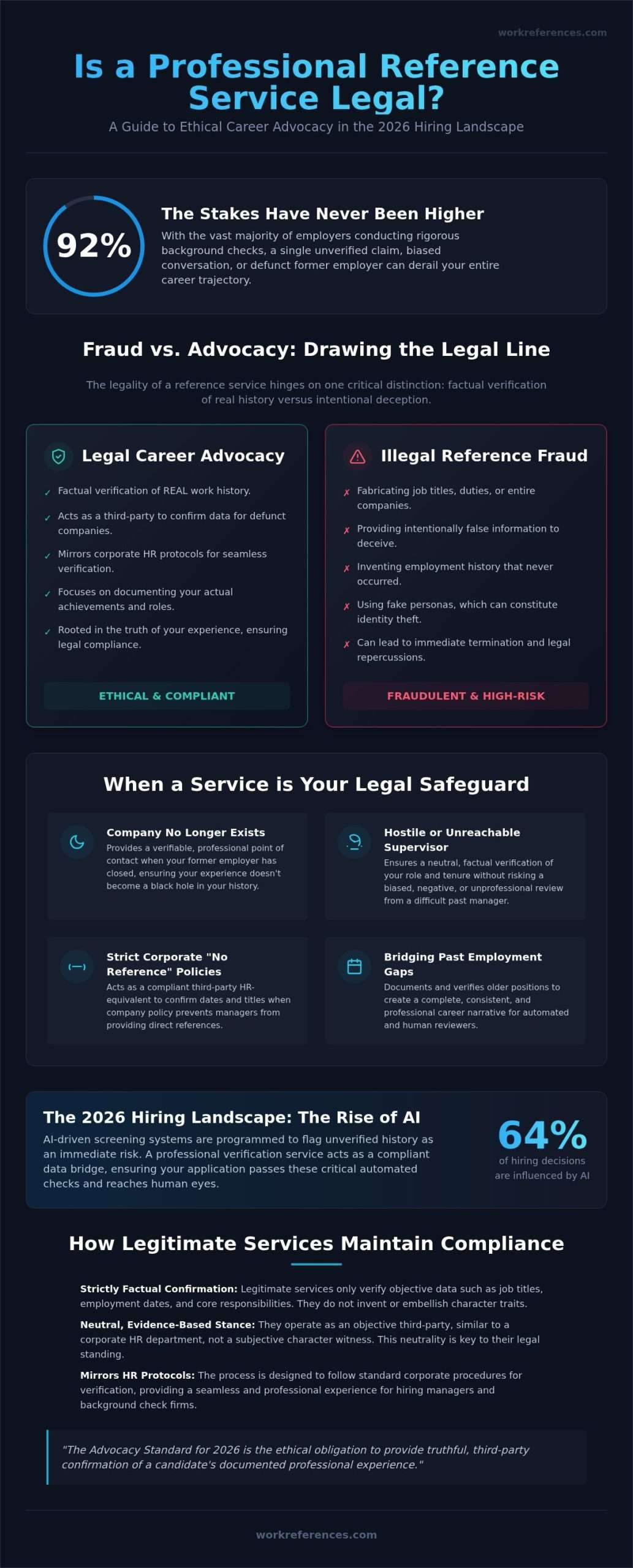
Could a single biased conversation or a closed business from your past derail your entire career trajectory? With 92% of employers now conducting rigorous background checks, the stakes have never been higher. You might find yourself wondering, is it legal to use a professional reference service to bridge these gaps? It’s a valid concern. The fear of being blacklisted for faking a history is real, especially when you’re just trying to ensure your actual hard work is accurately represented. You deserve a fair chance at the roles you’ve earned.
We understand that employment gaps and defunct companies shouldn’t be the end of your professional journey. This guide provides the legal and ethical framework you need to distinguish between illegal fraud and legitimate career advocacy. You’ll learn how to navigate the 2026 hiring landscape with total legal confidence. We’ll break down the specific differences between deceptive reference mills and professional verification services, ensuring your next job offer is built on a foundation of integrity and security.
Key Takeaways
- Distinguish between high-risk “reference mills” and legitimate career advocacy services that prioritize factual accuracy and procedural integrity.
- Understand the core legal principles behind representation versus misrepresentation to answer the question: is it legal to use a professional reference service?
- Learn how to professionally verify work history for defunct companies or manage hostile supervisors without triggering red flags during background checks.
- Discover how live phone answering and third-party verification mirror corporate HR protocols to provide a seamless, compliant experience for hiring managers.
- Identify the right level of support, from Basic to Executive Reference Packages, to safeguard your professional reputation during high-stakes career transitions.
Understanding the Legal Landscape of Professional Reference Services
When you stand at the threshold of a major career move, the silence of a former employer or a defunct company can feel like a terminal sentence. You might find yourself asking a critical question: is it legal to use a professional reference service to represent my history? The answer lies in the distinction between factual verification and identity deception. Legitimate services act as third-party verification entities. They don’t invent histories; they document them. In a market where 92% of employers use an employment background check to vet candidates, having a reliable channel for your data is a matter of professional survival. You have a right to ensure your record is accessible and accurate.
Fraud vs. Advocacy: The Legal Line
Fraudulent misrepresentation occurs when a candidate provides intentionally false information to secure a position. This includes fabricating job titles, inventing companies that never existed, or lying about the duration of employment. These actions can lead to immediate termination and potential legal repercussions. Conversely, professional advocacy involves the factual verification of real work history. If a company has closed its doors, providing a live contact to confirm your dates and duties isn’t just helpful; it’s a legal safeguard. Reference mills often rely on identity theft or fake personas to deceive recruiters. High-integrity career services, however, mirror corporate HR protocols to provide consistent, truthful data that stands up to scrutiny. They focus on what you actually achieved rather than what you wish you had done.
Employment Law and the Right to Verification
The Fair Credit Reporting Act (FCRA) governs how your data is handled during the hiring process, but it doesn’t prevent you from securing your own verification sources. Candidates often fear they’re trapped by a “no reference” policy or an unreachable supervisor. You aren’t legally required to let your application fail simply because a former manager is unavailable. You have a protected right to ensure your professional record is verified through legitimate means. Is it legal to use a professional reference service? Yes, as long as the service remains rooted in the truth of your experience. The Advocacy Standard for 2026 career services is defined as the ethical obligation to provide truthful, third-party confirmation of a candidate’s documented professional experience. This standard ensures that your career momentum isn’t halted by administrative hurdles or historical gaps that are beyond your control.
The 2026 labor market is increasingly automated. AI-driven systems now influence up to 64% of hiring decisions, and these systems often flag unverified history as an immediate red flag. This environment makes the role of a professional reference service even more critical. It acts as a bridge between your past achievements and your future potential. By choosing a service that prioritizes procedural integrity, you protect your reputation and your legal standing simultaneously.
How Professional Reference Services Maintain Legal Compliance
Compliance in the 2026 hiring environment isn’t a matter of chance; it’s a result of rigorous procedural design. When candidates ask, is it legal to use a professional reference service, they’re often concerned about the mechanics of the process. Legitimate services operate by adhering to the same standards as a corporate HR department. They focus exclusively on factual verification. This includes the precise confirmation of job titles, employment dates, and core responsibilities. By maintaining a neutral, evidence-based stance, these services provide a bridge of data that satisfies the requirements of even the most stringent hiring committees.
The Role of Factual Confirmation
Confirming work history is a neutral, legal act of documentation. A professional service doesn’t exist to “vouch” for character in a subjective sense. Instead, it serves as a repository for your professional milestones. When a supervisor is unreachable or a company has restructured, these services use existing records to provide credible third-party support. This ensures that your career narrative remains uninterrupted. Maintaining the critical guide to resume and reference consistency is vital here. Any discrepancy between what you claim on your resume and what a reference reports can trigger an automated rejection. A professional service eliminates this risk by aligning every response with your documented history.
Corporate Compliance and Background Screening
Modern background check firms operate under a “Reasonable Person” standard. They expect to find a verifiable trail of professional activity. Professional reference services interact with these firms by providing clear, organized, and truthful data. This interaction must align with federal guidelines, such as those regarding legal compliance for background checks. These regulations ensure that all parties act with transparency and fairness. By keeping meticulous records and following established HR protocols, a professional service acts as a vigilant career advocate. This protection is especially critical when navigating the complexities of the Fair Credit Reporting Act (FCRA).
Procedural integrity is the cornerstone of high-stakes executive hiring. At this level, every detail is scrutinized by multiple stakeholders. A single unverified gap can lead to a lost opportunity and a damaged reputation. Professional services mitigate this high-stakes risk by mirroring the formal registers used by Fortune 500 companies. They provide a layer of legal security that individual, informal references simply cannot match. It’s about building a defensive wall of verification around your career. If you’re concerned about how your specific background will be viewed by a screening firm, you might want to discuss your situation with a specialist to ensure your strategy is airtight.
Consistency is the ultimate goal. When a reference service answers a call, the recruiter should hear a professional, informed response that confirms the facts already in their possession. This seamless flow of information builds trust. It transforms a potential red flag into a non-issue. Because the service is rooted in the truth of your experience, it remains well within the bounds of employment law. You aren’t circumventing the system; you’re utilizing a sophisticated tool to ensure the system works as intended for you.
Professional Services vs. Fake References: Drawing the Legal Line
Drawing a clear line between career advocacy and criminal fraud is the most critical step in protecting your professional future. Many job seekers feel a sense of unease, wondering: is it legal to use a professional reference service or am I entering dangerous territory? To answer this, we must look at the intent and the execution of the provider. A “Fake Reference Mill” operates entirely on deception, creating fictional personas and fabricating experiences that never happened. A legitimate service, however, functions as a professional representative for your actual, documented history. One is a legal liability; the other is a strategic career asset designed for security.
The Red Flags of Illegal Services
Illegal services often leave a trail of digital red flags that modern background check firms are trained to spot. If a provider encourages you to lie about your job title or change your employment dates, you’re looking at a mill, not a service. These entities frequently use disposable phone numbers and unverifiable identities that crumble under basic scrutiny. Getting caught using these methods doesn’t just cost you the job. It can lead to permanent blacklisting in your industry and potential claims of fraud. You can read more about the truth about fake references and legitimate alternatives to understand these risks in depth. Deception is a short-term gamble with long-term consequences.
The Hallmarks of a Legitimate Service
Transparency is the defining characteristic of a compliant entity. Legitimate services verify your history against existing records to ensure every statement made to a recruiter is factual. They provide a stable, professional point of contact that mirrors a standard corporate HR office. This is why legitimate professional reference services are frequently utilized by high-level executives. These professionals often need to bridge gaps from closed firms or non-communicative past employers. They understand that third-party verification is a standard business practice, not a shortcut. It provides a layer of procedural integrity that individual, informal references simply cannot match.
The risk of being caught in a lie is catastrophic for any career. In contrast, using a service for factual verification is a defensive measure. Employers themselves face significant legal risks in providing references, which often leads to the “no comment” policies that leave candidates stranded. By utilizing a professional service, you aren’t bypassing the truth. You’re simply ensuring that the truth of your work history is communicated effectively and professionally. This procedural integrity is what keeps your application in the “yes” pile while others are discarded for unverifiable claims. It’s about presenting your documented past with the authority it deserves.
Strategic Use Cases: When a Reference Service is Your Legal Safeguard
Many candidates believe they’re at the mercy of their past employers’ administrative failures or corporate restructuring. If a company dissolves, your hard-earned experience shouldn’t vanish with its tax ID. This is precisely where the question, is it legal to use a professional reference service, becomes most relevant. It’s not just legal; it’s a necessary step to protect your professional narrative from being erased by circumstances beyond your control. You’ve done the work. You deserve to have it verified.
References for Closed Companies
When a business closes, the traditional verification path breaks. Recruiters often see an unanswerable phone line or a disconnected email as a red flag, regardless of the reason for the closure. Utilizing references for closed companies allows you to provide a legitimate, third-party point of contact that confirms your dates, titles, and achievements using historical documentation. This reframes a “lost reference” into a “validated history.” It ensures you meet the strict compliance requirements of modern background checks without the risk of being filtered out by automated systems.
Mitigating the ‘Bad Reference’ Risk
A biased or hostile supervisor can be a significant hurdle to your next move. While you can’t change a past manager’s temperament, you can choose how your history is represented to a prospective employer. Professional services act as a neutral buffer. They provide factual verification that adheres to corporate standards. This is a far safer and more ethical route than the common online suggestion of having a friend pretend to be your boss. That path is fraud. Using a professional service is career advocacy. You can explore the current landscape in our guide on do jobs actually call references? The 2026 reality.
Bridging employment gaps or managing complex exits requires a high level of procedural integrity. Is it legal to use a professional reference service in these cases? Absolutely. By utilizing factual career consulting and documentation, you ensure your reference narrative matches the highest corporate standards. This leaves no room for doubt or discrepancy during the final stages of the hiring process. It’s about taking control of your professional record in an era where automated screening is the norm. If you’re currently facing a difficult verification situation, contact our team of specialists today to secure your professional standing.
Ultimately, a professional reference service provides the stability that individual managers often cannot. Supervisors move on, companies merge, and records get lost. A dedicated service maintains the continuity of your professional story. It ensures that when a recruiter calls, they receive a prompt, professional, and factual response. This reliability is what separates successful candidates from those who lose offers at the final hurdle. You aren’t hiding your past; you’re ensuring it is communicated with the authority it deserves.
Securing Your Career with WorkReferences: The Ethical Path to Verification
The journey from professional anxiety to prepared confidence begins with a single, strategic decision. By now, the answer to the question, is it legal to use a professional reference service, should be clear. It’s a legitimate tool for factual verification, distinct from the deceptive practices of “reference mills.” At WorkReferences, we act as your vigilant career advocate, ensuring that your hard-earned history is communicated with authority and procedural integrity. We understand the high stakes of your next transition, and we provide the legal security required to navigate them successfully.
Our Professional Reference Packages
Our service is built on the foundation of transparency and speed. We optimize your career documentation to ensure total consistency between your resume and the responses provided to recruiters. This alignment is critical for passing the automated screening systems used by 92% of modern employers. Our tiered approach allows you to select the specific level of support your situation demands. You can review our pricing and tiers to find the right fit for your 2026 career goals.
- Basic Reference Package: Designed for individuals who need a foundational bridge for a single supervisor verification.
- Professional Reference Package: A comprehensive solution for mid-career professionals managing complex backgrounds or defunct companies.
- Executive Reference Package: Our most robust tier, offering the meticulous record-keeping and formal register required for high-stakes leadership roles.
The WorkReferences Guarantee of Integrity
Integrity isn’t just a buzzword for us; it’s our operational standard. When you ask is it legal to use a professional reference service, you are seeking the security that only a compliant, third-party entity can provide. We are committed to factual career representation. We don’t invent histories; we validate the truth of your experience through live phone answering and professional documentation. This commitment to compliance is why thousands of professionals trust us to protect their career narratives from biased supervisors or administrative gaps.
Moving forward doesn’t have to be a gamble. You’ve already done the hard work of building a career. Now, ensure that work is protected by a service that mirrors the highest corporate HR protocols. Our team provides the empathetic reassurance you need while maintaining the professional authority that recruiters respect. Don’t let an unverified history or a hostile former manager stand in the way of your next opportunity. You have the right to secure your professional future through ethical advocacy. Secure your job offer with a Professional Reference Package today and enter your next interview with total confidence.
Your career is your most valuable asset. Protecting it requires more than just a well-written resume; it requires a defensive strategy that stands up to the scrutiny of modern background checks. WorkReferences provides that strategy. By choosing the ethical path to verification, you ensure that your professional story is told accurately, legally, and with the sophistication your experience deserves. The path to your next role is open. We are here to help you walk it with certainty.
Take Control of Your Professional Narrative
Securing your next role in the 2026 hiring market requires a defensive strategy that protects your hard-earned reputation. You’ve seen that the line between fraud and advocacy is defined by factual accuracy. While you might still wonder, is it legal to use a professional reference service, the answer remains a definitive yes when rooted in truth. You don’t have to let a closed business or a biased supervisor stall your momentum. Your history belongs to you; you have the right to ensure it’s represented with integrity.
WorkReferences was founded in 2005 with a dedicated focus on career integrity. We offer specialized expertise in defunct company verification and provide tiered packages designed for all career levels. Our process mirrors formal HR protocols to provide the stability you need during high-stakes transitions. It’s time to move from concern to prepared confidence. Speak with a Vigilant Career Advocate about your reference needs today. You’ve earned your experience. Now, let’s make sure the world sees it clearly.
Frequently Asked Questions
Is it illegal to pay for a professional reference service in 2026?
No, paying for professional career advocacy or third-party verification is perfectly legal. The legality of the arrangement depends entirely on the truthfulness of the data provided. Professional services act as outsourced verification agents; they confirm your documented history to ensure administrative hurdles don’t block your progress. As long as the service provides factual information about your real work experience, it remains well within the bounds of employment law.
What is the difference between a fake reference and a professional service?
The core difference lies in the intent and the accuracy of the information provided to the recruiter. A fake reference involves identity theft or the fabrication of companies and job titles to deceive an employer. In contrast, a professional service verifies your actual achievements and work history. It provides a formal, stable point of contact for your real experience, ensuring your narrative is presented with corporate authority.
Can an employer fire me if they find out I used a reference service?
Employers generally prioritize the accuracy of your background over the specific channel used for verification. If the service provided truthful, documented data about your previous roles, there is typically no legal ground for termination. However, using a service to facilitate fraudulent misrepresentation or to lie about your qualifications is a serious risk. Maintaining procedural integrity through a legitimate service is the best way to safeguard your position.
Is it legal to use a reference for a company that is out of business?
Yes, it is legal and often essential to use a third-party service to verify history from a defunct company. When a business closes, recruiters often find themselves unable to confirm your tenure through traditional channels. A professional service bridges this gap by acting as a repository for your work history. It provides the live confirmation necessary to satisfy background check requirements without triggering the red flags associated with unverified gaps.
How do professional reference services verify my work history legally?
These services utilize your existing documentation, such as performance reviews or pay records, to build a factual verification profile. When a hiring manager calls, the service provides a live response that adheres to standard HR protocols. This ensures that the question is it legal to use a professional reference service is answered by the service’s commitment to documented truth. It transforms your raw history into a verified professional record.
What are the risks of using a ‘fake’ reference mill instead of a professional service?
Using a “mill” exposes you to catastrophic professional risks, including permanent blacklisting and potential claims of fraud. These entities often use disposable phone numbers that are easily detected by modern background screening software. Once a lie is uncovered, your reputation is irreparably damaged. A legitimate service provides a layer of legal security and stability that deceptive mills simply cannot replicate, protecting your career rather than endangering it.
Do background check companies consider professional reference services legitimate?
Yes, background screening firms frequently interact with third-party verification entities to confirm employment details. They are looking for a reliable, professional trail of activity that matches your resume claims. As long as the service provides consistent, factual data that aligns with other records, it is viewed as a legitimate point of contact. This transparency is critical for passing the rigorous checks conducted by 92% of modern employers.
What should I look for to ensure a reference service is legally compliant?
A compliant service will always prioritize transparency and will never encourage you to fabricate job titles or employment dates. Look for a provider with a long-standing history of ethical advocacy and a clear, tiered business structure. To ensure is it legal to use a professional reference service from a specific provider, verify that their methods mirror corporate HR standards and that they focus exclusively on confirming your actual, documented history.
Article by
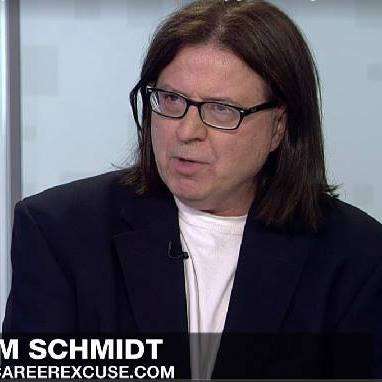
William Schmidt
William Schmidt is a former Fortune 500 recruiter and founder of WorkReferences.com, a pioneering employment verification and professional reference service established in 2009. With extensive experience working alongside hiring managers, recruiters, and background screening agencies, he helps job seekers overcome career obstacles through credible, third-party verification solutions that strengthen resumes and restore confidence in the hiring process