
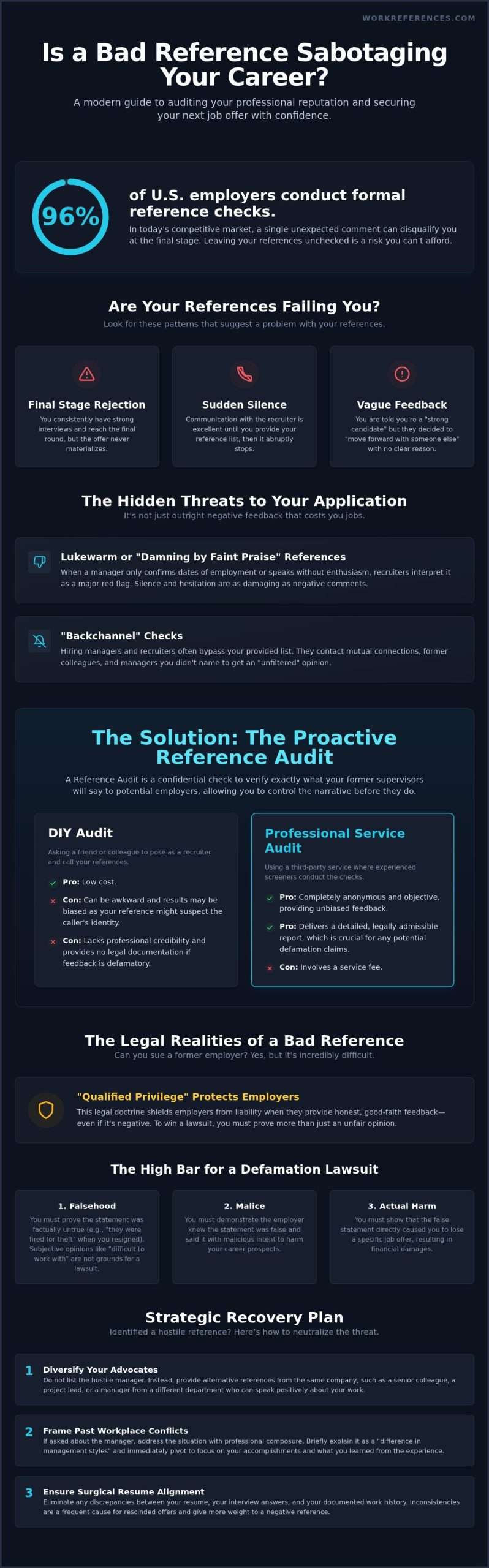
Did you know that 96.1% of U.S. employers now conduct formal screening checks before making a final job offer? When the stakes are this high, leaving your reputation to chance is a risk you cannot afford. If you’ve ever wondered why a “sure thing” suddenly went cold at the final stage, it’s time to learn how to check my own references to identify exactly what is being said about you behind closed doors.
It’s natural to feel a sense of dread when a former, perhaps hostile, supervisor holds the keys to your career progression. You’ve worked hard to build your professional standing, and the thought of one person’s bias derailing your momentum is genuinely unsettling. This strategic guide will teach you the exact methods to audit your reputation and understand your legal protections against unfair feedback. We will examine the 2026 FCRA disclosure requirements, provide strategies to neutralize negative comments, and show you how to obtain a professional verification report that bypasses difficult managers. By the end of this article, you’ll have a clear path to securing your next role with absolute confidence.
Key Takeaways
- Identify the hidden “backchannel” checks that modern recruiters use and learn how a proactive Reference Audit can protect your professional reputation.
- Master the specific procedures for how to check my own references to accurately gauge the “temperature” of former supervisors before they speak with potential employers.
- Understand your legal rights regarding “Qualified Privilege” and the specific evidence required to hold a former employer accountable for malicious or false feedback.
- Develop a strategic recovery plan to neutralize hostile managers by diversifying your advocates and framing past workplace conflicts with professional composure.
- Ensure surgical alignment between your resume and your professional history to eliminate discrepancies that frequently cause job offers to be rescinded at the final stage.
Why You Should Check Your Own References Before Your Next Interview
In a competitive hiring environment, your reputation is your most valuable asset. While you spend weeks perfecting your resume, a single phone call to a former manager can render that effort meaningless. This is why conducting a Reference Audit is no longer optional. A Reference Audit is a proactive check to verify the specific feedback your supervisors provide to potential employers. It ensures that the narrative you present in your interview aligns with the reality shared by your past employers.
Hiring trends in 2026 have shifted toward backchannel checks. Recruiters often look beyond your provided list to contact mutual connections or previous colleagues you didn’t explicitly name. If you don’t know how to check my own references across your entire professional network, you’re leaving your career to chance. A lukewarm reference, where a manager provides only basic dates of employment or speaks with a lack of enthusiasm, can be just as damaging as an outright negative comment. Silence or hesitation often signals a red flag to recruiters who are looking for reasons to disqualify candidates in a crowded field.
The Reality of Modern Background Screening
Modern screening involves a complex interaction between automated verification systems and live human screeners. While AI often handles the initial data sweep, live investigators are frequently used to bridge employment gaps or verify nuances that software might miss. Gaining a thorough understanding the background check process is essential for any serious professional. These third-party confirmations act as a bridge, ensuring your work history is validated with surgical precision before a final offer is extended. Defining the Reference Audit as a standard professional safeguard allows you to take control of this narrative before the automated systems do.
When to Suspect Your References are Failing You
You should be concerned if you consistently lose job offers after the final interview stage. This pattern often indicates that your qualifications are strong, but your professional validation is weak. If recruiter communication suddenly halts after they request your contact list, your references may be providing inconsistent or damaging feedback. It’s a common concern to wonder do jobs actually call references in the current market. The data suggests they do. Approximately 80% of corporate employers conduct some form of outreach to confirm professional history. Learning how to check my own references allows you to identify these leaks in your professional ship before they sink your next opportunity.
Can I Sue My Former Employer for a Bad Reference?
The short answer is yes, but the legal reality is complex. Most employers operate under a legal concept known as “Qualified Privilege.” This doctrine protects managers who provide honest, good-faith feedback about a former employee’s performance. As long as they don’t intentionally lie or act with malicious intent, they’re often shielded from liability. Understanding how employers conduct reference checks reveals that many companies have strict policies to avoid legal pitfalls, yet rogue managers still exist.
To win a defamation lawsuit, you must prove three things: falsehood, malice, and actual harm. It isn’t enough that the reference was mean or unfair. You must demonstrate that the manager stated something factually untrue, such as claiming you were fired for theft when you actually resigned. Subjective opinions, like “he was difficult to work with,” are hard to litigate because they represent a personal perspective rather than a verifiable fact. This is why learning how to check my own references is a more effective strategy than waiting for a lawsuit to fix your career. Litigation is a slow, reactive gamble that can take years to resolve.
Defamation, Libel, and Slander in Employment
Workplace defamation occurs when a former employer makes a false statement that damages your reputation. If the statement is spoken, it’s slander; if it’s written, it’s libel. The challenge lies in the high burden of proof required for reference-related lawsuits. Courts generally favor the employer’s right to share performance data unless you can prove actual malice, meaning the manager knew the statement was false or acted with reckless disregard for the truth. Proving exactly what a manager said during a private phone call remains the primary obstacle for most plaintiffs.
The Cease and Desist Strategy
A formal cease and desist letter is often more effective than a full-scale lawsuit. It puts the former employer on notice that you’re aware of their damaging comments and are prepared to take legal action. However, you cannot send a credible warning without evidence. Professional audits provide the documented proof needed to back up these legal warnings, illustrating exactly how to check my own references with procedural integrity. By documenting the feedback first, you can often stop a hostile manager from further damaging your career without the expense of a courtroom battle. If you suspect a specific manager is crossing the line, you can speak with our team to discuss how to document their feedback.
How to Conduct a Reference Audit: DIY vs. Professional Services
Securing your career requires a methodical approach to reputation management. You cannot rely on assumptions when your livelihood is at stake. To understand how to check my own references effectively, you must transition from a passive candidate to a proactive auditor. This process begins with identifying every individual who could potentially influence a hiring decision, including those not listed on your formal reference sheet. A strategic audit ensures that your professional narrative remains intact across all channels.
- Step 1: The Backchannel List. Recruiters in 2026 are increasingly skilled at finding “off-list” references. Your audit must include former peers and subordinate staff who might be contacted through mutual professional networks.
- Step 2: Personal Outreach. Contact your primary references directly. A brief, professional conversation allows you to gauge their current “temperature.” Listen for pauses, forced praise, or mentions of the legal aspects of reference checking that might signal they intend to provide only basic data.
- Step 3: Third-Party Audit. This is the only way to obtain an objective record. A professional service calls your references using a neutral, corporate script to document exactly what a recruiter will hear.
- Step 4: Report Analysis. Review the findings for subtle red flags. A reference who is technically accurate but unenthusiastic can be more damaging than a known hostile manager.
- Step 5: Strategic Replacement. Use the data to refine your list. If the audit reveals a lukewarm response, replace that individual with a more consistent advocate who can speak to your specific achievements.
The Risks of the ‘Amateur’ Audit
Many candidates fall into the trap of asking a friend to call their former boss. This is a dangerous tactic that frequently backfires. Professional screeners and HR managers are trained to identify fake inquiries immediately. They recognize inconsistencies in tone, script, and follow-up questions that an amateur will miss. If a former employer realizes they are being tested, it can lead to immediate legal friction or a permanently burned bridge. It’s essential to understand The Truth About Fake References before attempting a DIY approach that could compromise your professional integrity.
Why Professional Verification is Superior
A professional audit provides a level of procedural integrity that DIY methods cannot match. Services that offer live phone answering and detailed documentation ensure that you have a verifiable record of your professional standing. This documentation is a critical safeguard, allowing you to align your resume with the feedback being shared in the market. If you are ready to secure your reputation, you can contact us to begin a confidential audit. This proactive step ensures that when you learn how to check my own references, you are doing so with the backing of industry experts who understand the high stakes of the 2026 hiring landscape.
Strategic Recovery: How to Handle a Hostile or Unavailable Reference
Identifying a problematic reference through an audit is only the first step. Once you’ve learned how to check my own references and uncovered a supervisor who provides damaging or lukewarm feedback, you must implement a recovery strategy. A hostile manager doesn’t have to be the final word on your professional capabilities. By taking a proactive stance, you can neutralize negative commentary before it reaches a recruiter’s desk. This is about narrative control and procedural integrity, ensuring that one situational conflict doesn’t define your entire career trajectory.
One effective tactic is the “Reference Sandwich.” This involves strategically placing a lukewarm or strictly factual contact between two high-impact, enthusiastic advocates. By providing a list of five or six names instead of the standard three, you dilute the impact of a single mediocre response. You should also diversify your advocates. If a direct supervisor is hostile, lean on peers, long-term clients, or cross-functional leads who can verify your technical contributions and soft skills. These individuals often provide a more holistic view of your performance than a single manager with a personal bias.
Verifying History for Defunct Organizations
Losing a professional history because a previous employer went out of business is a common but dangerous hurdle. To a modern screener, the claim that “the company is closed” can sometimes sound like a convenient excuse to hide a termination. You need a way to provide the legitimacy that corporate investigators require. Professional services offer a solution by acting as a verifiable point of contact for these gaps. Utilizing References for Closed Companies ensures that your work history remains secure even when the original entity no longer exists.
The Narrative Pivot
If you anticipate a negative reference, use the “Pre-emptive Strike” during your interview. Frame the situation as a “cultural misalignment” or a “shift in management philosophy” rather than a personal conflict. This demonstrates professional maturity. You aren’t complaining about a difficult boss; you’re explaining a situational mismatch. When you understand how to check my own references, you gain the data needed to offer additional advocates before the hiring manager even asks. This transparency builds trust and proves that the issue was an isolated incident rather than a character flaw. If you need assistance documenting a hostile manager’s feedback for your records, you can contact our team for a confidential consultation.
Securing the Offer with Professional Verification and Resume Alignment
The final hurdle in your job search isn’t just what your references say, but how their feedback matches your written history. If you’ve mastered how to check my own references, you now possess the intelligence required to align your professional documents with surgical precision. Discrepancies between a resume and a reference check are often interpreted as intentional deception rather than simple clerical errors. Research from 2026 indicates that 85% of employers have discovered lies on candidate applications. Even a minor date error can trigger a red flag that halts a job offer at the eleventh hour.
Utilizing a Professional Reference Package acts as a strategic safeguard against these preventable setbacks. This service provides a mirror image of the feedback potential employers will receive, allowing you to identify inconsistencies before they become liabilities. Once you have this report in hand, you can utilize resume writing and editing to adjust your presentation. This process isn’t about fabricating history; it’s about ensuring your documents reflect the verified reality of your tenure and responsibilities as reported by your former employers.
Ensuring Total Document Consistency
You must validate every date, job title, and core responsibility against your audit results. Recruiters look for internal consistency to build a foundation of trust. Understanding the principles of Resume and Reference Consistency is the final step in the Vigilant Career Advocate approach. By optimizing your documents to match verified data, you eliminate the friction that causes many of the 96.1% of employers who conduct formal screenings to hesitate. Total alignment ensures that your background check is a mere formality rather than a high-stakes gamble.
Final Checklist for Job Seekers
Transitioning from professional anxiety to prepared confidence requires a methodical final review. Use this checklist to ensure you’re ready for the 2026 market:
- Audit: Know exactly what every manager and backchannel contact will say.
- Diversify: Use peers, clients, and cross-functional leads to balance lukewarm feedback.
- Pre-empt: Discuss situational misalignments during the interview before they become red flags.
- Verify: Ensure your resume and audit report are in total, surgical alignment.
There is an immense peace of mind that comes from knowing your reputation is secure. You no longer have to guess why offers disappear at the final stage. By learning how to check my own references and acting on that intelligence, you take the first step toward your next offer today. You’ve worked hard to build your career; don’t let a single unverified comment or a minor document discrepancy stand in your way.
Take Control of Your Professional Narrative
Your career is too valuable to leave in the hands of a former supervisor who may not have your best interests at heart. By mastering how to check my own references, you move from a position of uncertainty to one of strategic advantage. You now understand that a proactive audit is the only way to identify backchannel risks and ensure your resume matches the feedback recruiters receive with surgical precision. Navigating the 2026 job market requires more than just talent; it requires the procedural integrity to protect your reputation from situational misunderstandings or hostile managers.
Don’t let an unverified comment derail your professional momentum. WorkReferences has been trusted by professionals since 2005 to provide the clarity needed for high-stakes career transitions. We provide live phone answering for 100% verification success, offering legitimate alternatives to risky fake references that often backfire. It’s time to validate your history with the same rigor that modern employers use during their screening process. Secure your career future with a Professional Reference Audit. Your next great opportunity is within reach, and you deserve to pursue it with absolute confidence.
Frequently Asked Questions
Can I sue my former employer for a bad reference if what they said was true?
No, you generally cannot sue for a negative reference if the statements made are factually accurate. Truth serves as an absolute defense in defamation cases; employers are legally protected under the doctrine of qualified privilege when they provide honest feedback. However, if a manager includes malicious intent or displays a reckless disregard for the facts, you may have grounds for a claim. It’s essential to document exactly what was said before considering any legal action.
How do I check my own references without them knowing?
You can check your references discreetly by utilizing a professional third-party audit service. These experts contact your former supervisors using a neutral, corporate inquiry script that mirrors a standard background check. This method ensures you receive a detailed report of their feedback without alerting them to your personal involvement. Learning how to check my own references through a professional entity maintains your procedural integrity while providing the critical intelligence needed to protect your reputation.
Is it illegal for a company to give a bad reference in 2026?
It is not illegal for a company to provide a negative reference in 2026, provided the information shared is accurate and non-discriminatory. While many HR departments follow strict neutral-reference policies to limit liability, individual managers may still share subjective performance data. You are protected by the Fair Credit Reporting Act regarding how third-party services report this data. Understanding your rights is the first step in neutralizing a hostile manager’s impact on your professional future.
What should I do if my former manager is ‘unreachable’?
If a former manager is unreachable, you should provide contact details for a peer, a secondary supervisor, or an HR representative who can verify your tenure. Recruiters in 2026 often view unreachable contacts as a potential red flag. Professional verification services can often track down defunct company records or alternative points of contact to bridge these gaps. This ensures your work history remains validated even when specific individuals have left the industry or the organization.
Can a prospective employer find out I used a reference checking service?
No, a prospective employer will not find out that you conducted a private reference audit. These services are strictly confidential and operate independently of the hiring firm’s screening process. The inquiry is presented as a standard employment verification, which is a routine occurrence in the corporate world. Using a service allows you to identify risks privately. You can then address any issues before the employer’s official check begins, ensuring you remain in control of the narrative.
How long does a professional reference audit take?
A professional reference audit typically takes between 24 and 72 hours to complete. Automated platforms can sometimes deliver results in under 24 hours, while manual outreach to specific managers may take slightly longer depending on their availability. This speed is a significant advantage over traditional methods, which can drag on for a week or more. Quick results allow you to make immediate adjustments to your candidate profile before your next high-stakes interview begins.
Can I use a colleague as a reference if my manager hates me?
Yes, you can use a colleague as a reference, but you should explain the context to the recruiter. Positioning a peer as a cross-functional lead or technical partner can provide a legitimate alternative to a hostile manager. This strategy works best when you also provide a secondary supervisor or a client advocate. Diversifying your list demonstrates that your professional value is recognized by those who worked most closely with you on a daily basis.
What happens if a background check finds a discrepancy in my work history?
If a background check identifies a discrepancy, the employer may rescind the job offer or delay your start date to seek clarification. Discrepancies in dates, titles, or responsibilities are often viewed as indicators of dishonesty. Since 85% of employers have discovered resume lies, they are highly sensitive to these errors. Auditing your history ensures your resume is in surgical alignment with what your references will report, effectively eliminating this risk before it occurs.
Article by
William Schmidt
William Schmidt is a former Fortune 500 recruiter and founder of WorkReferences.com, a pioneering employment verification and professional reference service established in 2009. With extensive experience working alongside hiring managers, recruiters, and background screening agencies, he helps job seekers overcome career obstacles through credible, third-party verification solutions that strengthen resumes and restore confidence in the hiring process