
What if the only thing standing between you and your new career is a manager who no longer exists or a company that shuttered years ago? It is a high-stakes moment when HR requests your professional verifications. You have successfully demonstrated your skills, yet the fear of losing a job offer at the final stage remains a heavy burden. This anxiety is understandable. In 2026, 96% of companies conduct some form of background check, and the rise of AI-powered recruiting software means your history is under more scrutiny than ever before.
Many qualified candidates find themselves paralyzed, wondering what to do when you have no good references due to employment gaps or defunct employers. You don’t have to let a lack of traditional contacts derail your progress. This guide provides a strategic plan to build a credible reference list from scratch and gain the confidence to explain your professional history to HR. You’ll learn how to navigate the verification process with integrity, ensuring you pass the final hurdle and secure the position you deserve. We will detail exactly how to transform a perceived weakness into a demonstration of professional transparency and prepared confidence.
Key Takeaways
- Shift your perspective from seeking character testimonials to providing a verifiable professional history that satisfies modern corporate compliance standards.
- Discover what to do when you have no good references by leveraging cross-departmental peers and former colleagues who can provide legitimate, professional-grade verification.
- Learn specific strategies to validate your tenure at defunct companies where standard HR records and former supervisors are no longer accessible.
- Implement a systematic audit of your career timeline to identify and resolve potential verification gaps before they reach a hiring manager’s desk.
- Identify how professional reference packages act as a strategic safeguard to ensure your employment history remains credible and secure during high-stakes transitions.
Understanding the High Stakes of the Reference Check in 2026
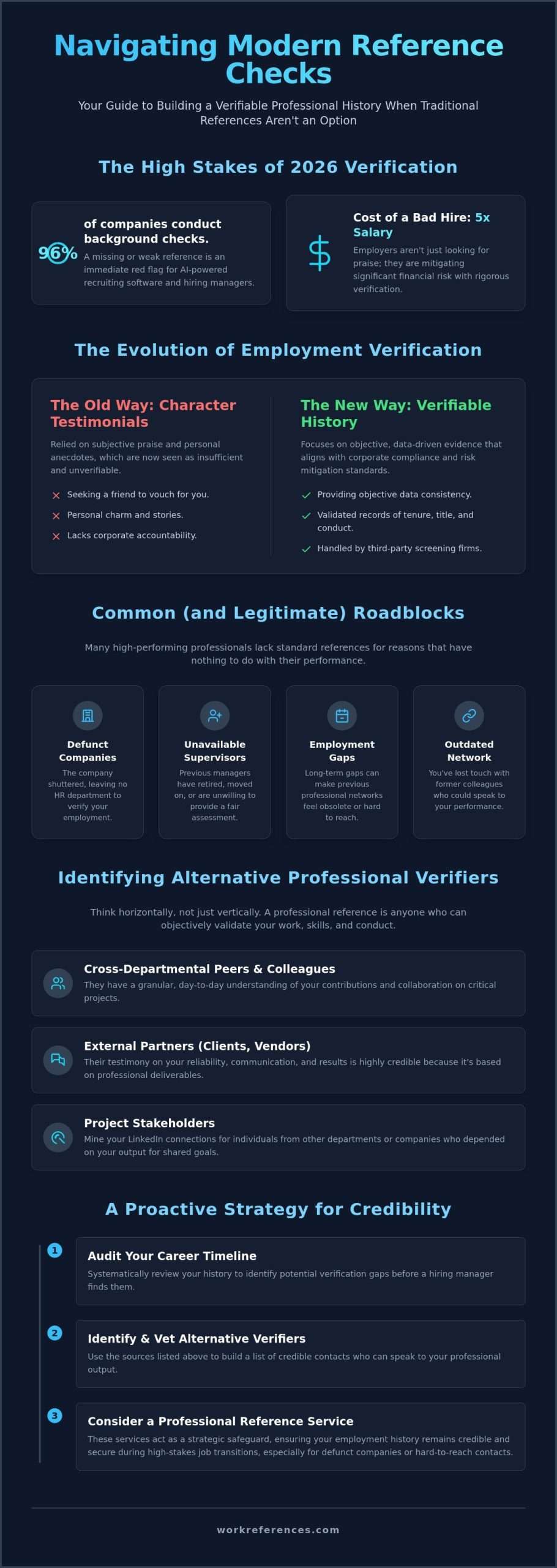
The reference check is the final gatekeeper in the modern hiring process. It’s a high-stakes moment where your professional narrative meets corporate scrutiny. In 2026, 96% of employers conduct some form of background screening, turning this stage into a rigorous exercise in risk mitigation. A missing or weak reference list doesn’t just look like a lack of preparation; it creates a psychological red flag for hiring managers. It suggests a lack of transparency or a history of poor performance, even if the reality is far more innocent. This process is a critical component of Understanding the High Stakes of the Reference Check, ensuring that every claim on a resume is backed by objective data.
Hiring is expensive. When you consider that the Society for Human Resource Management estimates the average cost of a bad hire can reach five times the position’s annual salary, the intensity of this scrutiny makes sense. Employers aren’t just looking for praise. They’re seeking data consistency. Understanding what to do when you have no good references is critical because HR departments now prioritize verifiable facts over personal charm. They aren’t looking for a friend to vouch for you; they’re looking for objective, verifiable evidence that your career history is exactly what you claim it is.
The Evolution of Employment Verification
The landscape has shifted toward automated, data-driven platforms. Third-party background screening firms now handle the bulk of this work, focusing on procedural integrity rather than personal anecdotes. These firms don’t want stories; they want data. Personal character references are often insufficient for mid-to-senior roles because they lack the weight of corporate accountability. If your history doesn’t align with their records, it triggers an immediate red flag. This shift means that a “good” reference is no longer just a positive testimonial. It’s a validated record of your tenure, title, and professional conduct that stands up to 2026’s rigorous compliance standards.
Common Reasons for Lacking Standard References
Many high-performing professionals face legitimate hurdles that have nothing to do with their performance. Companies shutter, leaving no HR department to answer the phone. Toxic supervisors might refuse to provide a fair assessment, or long-term employment gaps can make your previous network feel obsolete. These scenarios don’t make you a bad candidate, but they do require a strategic approach to verification. You must bridge these gaps with alternative forms of proof to maintain your credibility. When standard channels are closed, utilizing professional reference services can provide the necessary safeguard to ensure your career progression isn’t stalled by factors outside your control.
Identifying Alternative Professional Reference Sources
When a direct supervisor is unavailable, many candidates feel they’ve hit a dead end. This is a misconception. A professional reference is any individual who can objectively validate your work performance, technical skills, and adherence to corporate standards. If you’re struggling with what to do when you have no good references, start by looking horizontally rather than just vertically. Colleagues who worked alongside you on critical projects often have a more granular understanding of your daily contributions than a distant manager. Their testimony is legitimate, provided they can speak to your professional output within a business context.
External partners are another underutilized asset. Clients, vendors, or freelance collaborators can speak to your reliability and results with high credibility. These relationships are built on professional deliverables, making them excellent substitutes for traditional internal managers. For those early in their careers, academic mentors or volunteer coordinators serve as legitimate pillars of verification. These individuals have observed your work ethic in structured environments. Their input is valuable to HR departments seeking to mitigate the risk of a bad hire, especially when they can verify specific milestones or responsibilities you managed.
Mining Your Professional Network
Your LinkedIn connections are a goldmine for hidden references. Look for project stakeholders who depended on your output or cross-departmental peers who collaborated on shared goals. These individuals aren’t just character contacts. When you frame their input around specific deliverables and shared KPIs, they become powerful professional verifiers. If you’re unsure how to categorize these contacts or need help structuring your outreach, consulting with a specialist can help you organize your list for maximum impact and procedural integrity.
The Risk of Unprofessional References
It’s tempting to follow common online advice and list a friend or family member. Don’t do it. Modern background screening firms are trained to detect non-business references through identity verification and digital footprint analysis. Using a fake reference is a high-risk gamble that can lead to being blacklisted by recruiters. Professionalism requires a formal register. If a contact cannot speak to your professional competencies within a business framework, they don’t belong on your list. Maintaining this standard is the only way to move from a state of concern to prepared confidence during the final stages of the hiring process.
Dealing with Difficult Scenarios: Defunct Companies and Gaps
Even with a robust professional network, certain logistical hurdles can feel insurmountable. When a former employer ceases operations, the traditional verification path disappears completely. You aren’t just losing a contact; you’re losing the primary source of truth for your professional history. In these high-stakes moments, understanding what to do when you have no good references requires shifting from a testimonial-based strategy to a documentation-heavy approach. Being proactive rather than defensive is the hallmark of a “Vigilant Career Advocate.” It’s about presenting solutions to HR before they identify a problem.
Addressing “bad” references is equally critical for maintaining procedural integrity. If you anticipate negative feedback from a toxic former supervisor, you must pre-empt that negative feedback loop. This involves providing a larger volume of positive, verifiable data to outweigh the outlier. Transparency with hiring managers about a specific professional mismatch, when backed by several other strong verifications, often neutralizes the risk. It demonstrates a level of maturity and awareness of corporate dynamics that recruiters find reassuring.
When the Company No Longer Exists
A closed business doesn’t have to be a dead end for your background check. You can secure your work history by utilizing specific references for closed companies techniques. When HR records are inaccessible, primary source documents become your best defense. Tax records, W-2s, and pay stubs serve as irrefutable proof of employment tenure. Additionally, social media platforms allow you to locate former colleagues who can act as peer verifiers. If these manual efforts feel insufficient, using professional services to provide third-party confirmation acts as a credible bridge for corporate compliance departments.
Explaining Gaps Without Losing the Offer
Employment gaps often trigger anxiety, but they are manageable with the right framing. Instead of leaving a chronological hole, categorize these periods as professional development, independent consulting, or specialized training. Consistency is the key to passing modern screening. You must ensure absolute resume and reference consistency during the interview process. If your verbal explanation doesn’t match your career documentation, it creates a discrepancy that AI-driven software will flag. By maintaining a meticulous record of your activities during gaps, you transform a potential red flag into a narrative of continuous growth and professional initiative.
Building Your New Reference List Step-by-Step
Building a reference list from scratch is not a matter of luck. It is a tactical exercise in network management. Your first step is to conduct a thorough audit of your professional timeline to identify specific verification gaps. These are the periods where a lack of a direct supervisor or a defunct company might trigger an automated red flag. Once these gaps are identified, you can begin the process of filling them with the alternative sources discussed earlier. Understanding what to do when you have no good references involves transforming these chronological holes into a structured list of credible verifiers who can speak to your competencies with precision.
After identifying your potential verifiers, you must verify their current contact information and availability. A dead phone number or an outdated email address is a professional lapse that suggests a lack of attention to detail. This preparation ensures that when the background screening process begins, your documentation moves through the system without friction. It’s about maintaining procedural integrity at every stage of the verification cycle.
The Outreach Script: How to Ask
Your outreach must be formal and respectful of the verifier’s time. Do not simply ask for a “recommendation.” Instead, request a professional verification of your past performance. Provide “memory joggers” by briefly summarizing the specific projects you completed together and the results you achieved. This reduces the cognitive load on your contact and ensures their feedback is accurate. If you receive a “no” or a lukewarm response, accept it with professional grace. A hesitant reference is a liability. It is better to have a shorter list of enthusiastic, prepared verifiers than a longer list of uncertain ones.
Preparing Your References for Success
Never let your references be surprised by a phone call or email. Brief them on the specific role you are pursuing and provide them with your updated resume. This allows them to align their feedback with the key competencies the employer is seeking. You should also explain the timing of reference checks so they know when to expect contact from HR or a third-party screening firm. If you find the process of coordinating these moving parts overwhelming, our team can help you structure your list for maximum professional impact.
Conclude your process by following up with a formal thank-you note once the verification is complete. Keep your references updated on your job search status. This maintains the health of your professional network and ensures these individuals remain willing to support your career progression in the future. A well-managed reference list is a long-term professional asset, not just a one-time requirement.
Professional Reference Services: A Strategic Advantage
When traditional networks fail and your personal outreach efforts reach a dead end, a DIY approach may no longer be sufficient to protect your career trajectory. This is the moment to consider a professional job reference service. These services act as a sophisticated bridge between your career history and the rigorous demands of modern corporate HR. In a market where 96% of employers conduct background checks, leaving your professional verification to chance is a risk you cannot afford. Professional services provide a controlled, legitimate environment where your tenure and titles are confirmed with the procedural integrity that screening firms expect.
If you are still weighing what to do when you have no good references after exhausting your list of colleagues and stakeholders, professional verification offers a definitive resolution. It moves the process away from the unpredictability of personal favors and into the realm of corporate compliance. For high-stakes roles, the benefits of live phone answering and career consulting are particularly critical. These features ensure that when a recruiter or automated system attempts to validate your history, the response they receive is professional, consistent, and fully aligned with your career documentation.
How Professional Reference Packages Work
The mechanics of third-party employment confirmation are designed to mirror standard corporate protocols. This involves a meticulous validation of your resume against established records to ensure absolute consistency. Candidates can choose between different service tiers based on their specific needs and career level. A Basic Reference Package might be ideal for entry-level roles or short-term gaps. Conversely, an Executive Reference Package provides the high-touch support and detailed verification required for senior leadership transitions. Viewing these services as part of your strategic pricing for career advancement allows you to treat your professional history as a protected asset rather than a liability.
The Final Safeguard for Your Career
Professional references are an essential tool for the modern professional. They are not an optional luxury but a necessary safeguard for your professional reputation. During sensitive career transitions, especially those involving defunct companies or toxic past environments, you need a partner who understands the hidden hurdles of the hiring world. This service allows you to move from a state of concern regarding potential setbacks to a feeling of prepared confidence. Your next step is to secure your job offer by ensuring your background check is supported by a verified, professional history. By taking this proactive measure, you eliminate the final obstacle between your skills and your new career.
Take Control of Your Professional Verification
The final stage of the hiring process shouldn’t be a source of anxiety. By shifting your focus from personal testimonials to verifiable career data, you’ve already taken the first step toward securing your future. You now have a clear roadmap for what to do when you have no good references, whether that means mining your network for cross-departmental peers or gathering primary documentation for defunct employers. Your professional history is an asset that requires active management and protection to survive modern corporate scrutiny.
Since 2005, we’ve provided third-party employment verification that bridges the gap between ambitious candidates and rigorous HR departments. With live phone answering for reference checks and tiered packages for every career level, we ensure your history is presented with absolute procedural integrity. Don’t let a missing contact or a closed company derail your hard-earned progress. Secure your job offer with a Professional Reference Package today and move forward with the certainty that your background is fully validated. You’ve done the work; now ensure your verification list proves it with confidence.
Frequently Asked Questions
What do I do if my former boss refuses to give a reference?
Pivot to alternative professional sources immediately. If a supervisor is uncooperative, identify a peer or a cross-departmental manager who can verify your work output and professional conduct. This ensures your verification process remains active. You may also utilize professional services to provide a neutral, verifiable history that satisfies corporate compliance requirements without relying on a single individual’s personal bias.
Can I use a coworker as a professional reference if my manager is unavailable?
Yes, coworkers are legitimate professional references if they can speak to your technical skills and project contributions. HR departments frequently accept peer references when a direct supervisor is unreachable or the company has shuttered. Frame the coworker’s input around specific deliverables and shared KPIs to maintain a formal register. This is a common strategy when you are determining what to do when you have no good references from senior management.
How do employers verify employment for a company that is out of business?
Employers use primary source documentation like W-2s, tax records, and pay stubs to verify tenure when a company is defunct. They may also use third-party screening firms to locate former executives or HR directors via professional networks. Providing these documents upfront demonstrates transparency and prevents your application from being stalled by a lack of accessible corporate records during the final verification stage.
Is it illegal to use a professional reference service?
No, it is entirely legal and a common practice for professionals protecting their career interests. These services provide legitimate employment verification and live phone answering to ensure your history is communicated accurately to hiring managers. It functions as a strategic safeguard for your reputation, especially in high-stakes industries where procedural integrity and data consistency are non-negotiable requirements for professional advancement.
How many references do I actually need for a standard job application?
A standard professional requirement is three to five references. Most corporate background checks require at least two individuals who have directly observed your work within the last five to seven years. Having a mix of supervisors, peers, and external stakeholders ensures a comprehensive view of your professional capabilities while providing redundancy if one contact is unavailable during the high-stakes screening window.
What happens if a recruiter calls a reference who doesn’t answer?
Recruiters typically attempt to contact a reference multiple times before notifying the candidate of a verification gap. If a contact remains unreachable, it can create a red flag that suggests a lack of preparation. To avoid this, always verify your contacts’ availability beforehand. If you are struggling with what to do when you have no good references who are reliably reachable, professional packages offer live answering to maintain momentum.
Will an employer still hire me if I have a “neutral” reference policy at my old job?
Yes, many large corporations have strict “neutral” policies where they only confirm dates of employment and job titles. Recruiters are familiar with these legal safeguards and do not view them as a negative reflection on your performance. In these cases, providing additional peer references or project stakeholders who can offer more detailed feedback helps round out your professional profile while respecting corporate boundaries.
Should I list my references directly on my resume or wait for the request?
Wait for the request rather than listing references directly on your resume. This protects the privacy of your contacts and allows you to brief them on the specific role before they are contacted. It also gives you the opportunity to tailor your reference list to the specific competencies required for the position, ensuring the highest level of alignment between your resume and the verification data provided to HR.
Article by
William Schmidt
William Schmidt is a former Fortune 500 recruiter and founder of WorkReferences.com, a pioneering employment verification and professional reference service established in 2009. With extensive experience working alongside hiring managers, recruiters, and background screening agencies, he helps job seekers overcome career obstacles through credible, third-party verification solutions that strengthen resumes and restore confidence in the hiring process